How does the price of energy effect the economics of hybrid vehicles?
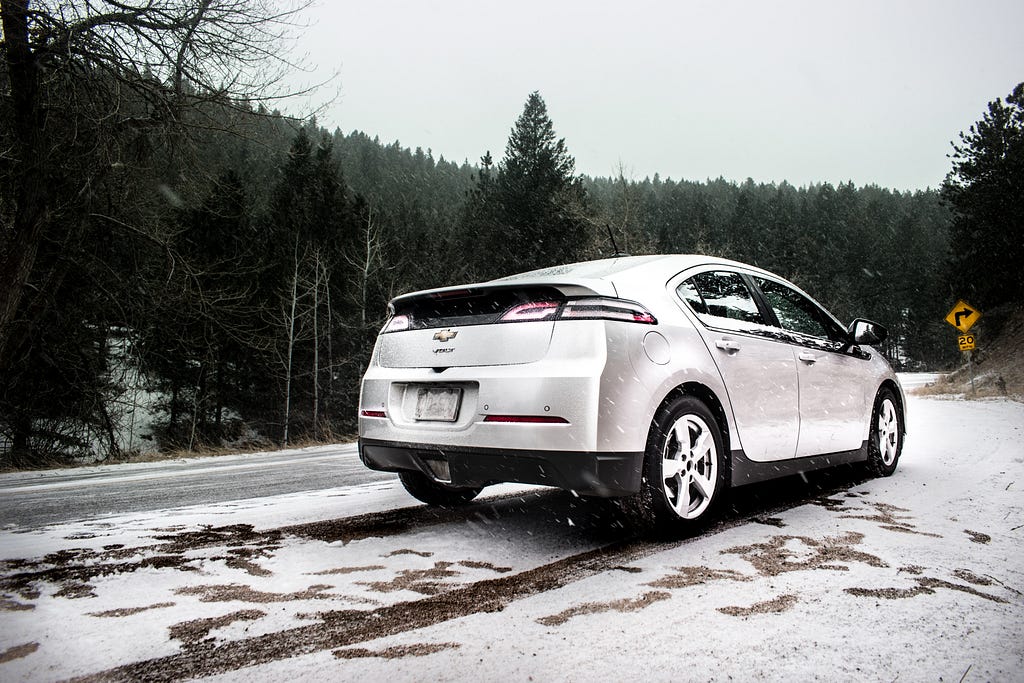
I was in the car with my dad, who drives a Chevy Volt, earlier this week. We were trying to decide if it would be more worth it to charge the car, or fill it with gas. The math we did in our heads pointed to gasoline being cheaper. Here’s a more formal analysis of what type of energy you should be putting in your car, by state.
I’m getting my gas price data from AAA, at this link. My electricity price data comes from the U.S. Energy Information Administration. Here’s a link. Data on the Chevy Volt’s mileage comes from fueleconomy.gov
You may be wondering if the Volt is a good car to be using for this analysis. Are other cars more efficient? I checked the EPA’s fuel economy numbers for all plug-in hybrids being sold in 2019, and only found two cars that do better than the Volt: the 2019 Toyota Prius Prime (25 kWh/ 100 mi), and the 2019 Hyundai Ioniq Plug-in Hybrid ( 28 kWh/ 100 mi). However, these cars do not have an electric only mode, they always run with gas. So using the Volt provides Plug-in hybrids the “benefit of the doubt” if you will.
Here are the core assumptions I’m making.
Let’s work through one state together. Let’s take my home state of Connecticut.
Let’s go a step farther. The average miles driven by an average driver in the United States is 13,476. The source on that is the US Department of Transportation. Let’s figure out how expensive it would be to drive for a year with each of those energy sources.
What’s important here isn’t just that you would save $21.55 per year if you ran on gas over electric, but the price premium that electric vehicles command. Take for example the Hyundai Ioniq. The base level hybrid costs $21,400, and the plug-in hybrid costs $25,350. Both of these models are somewhat comparable to the Elantra, which costs $14,600. Let’s look at Honda. The Clarity Plug-in Hybrid costs $33,400, and a regular Civic costs $24,300. In both of these cases, we’re seeing a significant price premium for Plug-in vehicles. Electric vehicles must provide savings over gas vehicles to justify the higher price point.
I’ve calculated the numbers for each state, and published the results below. In the second pane, you can set your own hurdle rate, to see if you’d break even in 8 years of car ownership. You can see how your state’s energy rates compare to others in the third tab of the visualization. Feel free to explore!
A version of the article with embedded visualizations is at https://nandantumu.me/post/hybrids-really-cheaper/.
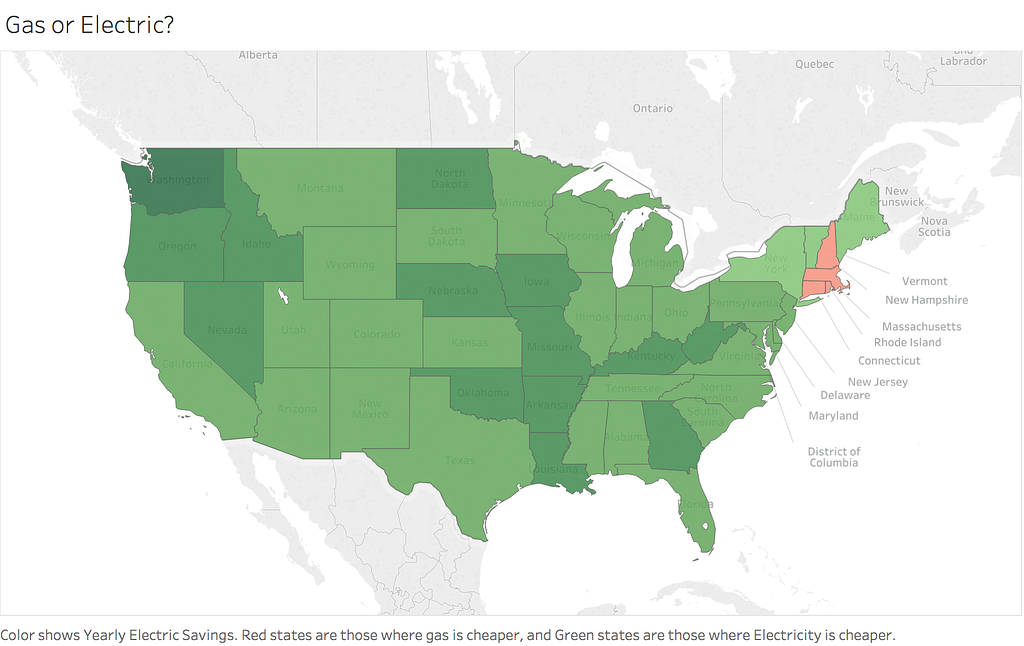
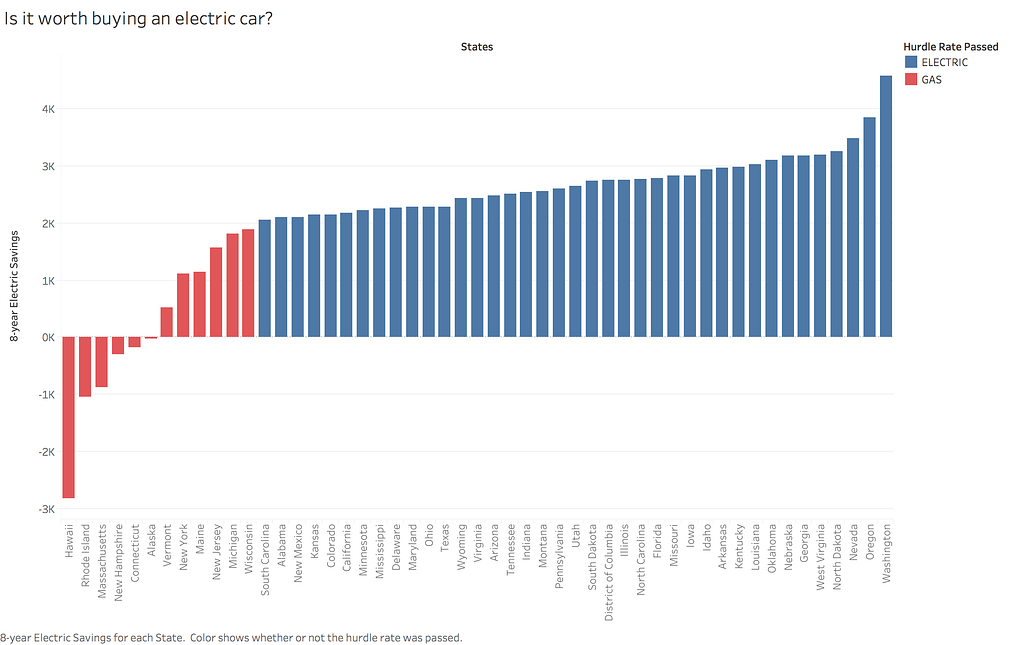
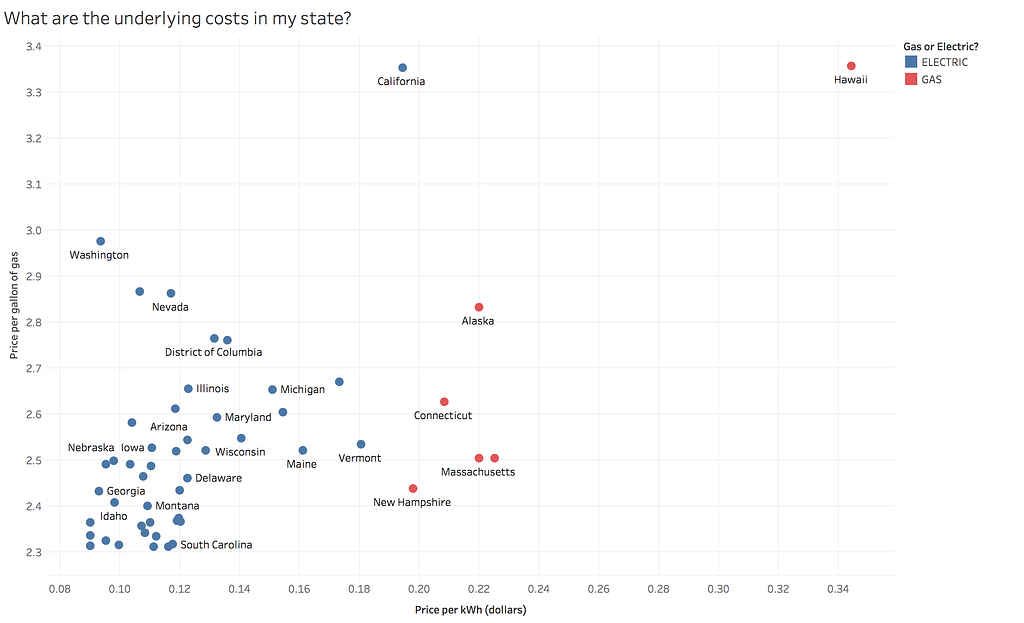
There are six states where gas is cheaper than electric in this case. Alaska, Connecticut, Hawaii, Massachusetts,New Hampshire, and Rhode Island. There are a couple things of note here though. Gas prices are more variable than electricity prices, meaning at this time next year, gas may be significantly more expensive, while electricity prices remain the same. On the other hand though, electric vehicles and plug-in hybrids are more expensive than traditional gas powered cars. A hurdle rate of $5,000 is not cleared in any of the states in the USA. When companies like Tesla advertise gas savings as part of their prices, calculations like the ones we just performed take on a new importance. I think the 6 states above need to take a hard look at the cost of electricity in their states. Utility costs are a significant cost of doing business, and lowering them doesn’t just impact the economics of hybrids.